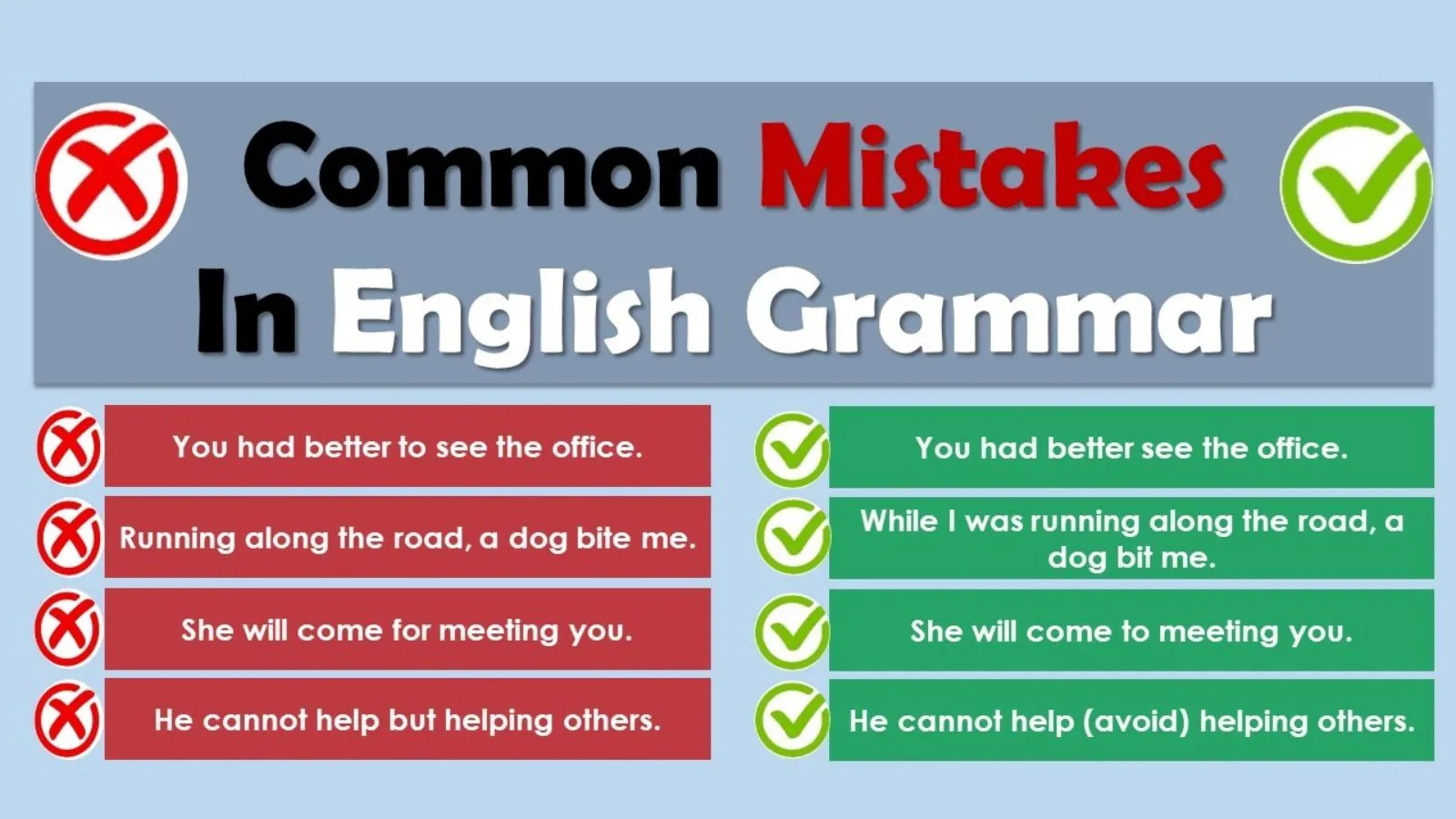
Grammar is the backbone of clear communication. Yet, even native speakers make small mistakes that weaken their writing. Many people search for “30 most common grammar mistakes to avoid” because they want to write better emails, essays, or blog posts. Employers, teachers, and readers often judge the quality of your work by how correct your grammar is.
The confusion comes from the fact that English has many tricky rules. Words may sound the same but mean different things, sentences may look correct but are not, and British English vs American English adds even more doubt.
This article highlights the 30 most common grammar mistakes people make, explains why they happen, and shows how to avoid them. By the end, you will know how to write more clearly, sound professional, and feel confident in every message you send.
30 Most Common Grammar Mistakes to Avoid – Quick Answer
Here are examples of the most frequent mistakes:
- Your vs You’re → Wrong: Your welcome. ✅ Correct: You’re welcome.
- Its vs It’s → Wrong: The dog wagged it’s tail. ✅ Correct: The dog wagged its tail.
- Their vs There vs They’re → Wrong: There going to school. ✅ Correct: They’re going to school.
👉 In short: most grammar mistakes happen with homophones, verb tenses, punctuation, and subject-verb agreement.
The Origin of Grammar Mistakes
The word “grammar” comes from the Greek grammatike, meaning “the art of letters.” Mistakes started being recorded as early as the 14th century when English spelling became standardized. Because English borrows words from Latin, French, and German, rules became complex.
Many common mistakes, such as confusing affect and effect, come from Latin-based words. Others, like your vs you’re, come from contractions invented later in Middle English.
British English vs American English Grammar Differences

Some grammar “mistakes” depend on whether you use British or American English.
| Example | British English | American English | Notes |
|---|---|---|---|
| Collective nouns | “The team are winning.” | “The team is winning.” | Both correct, but usage differs. |
| Past tense of “learn” | Learnt | Learned | Both accepted. |
| Spelling | Colour | Color | Grammar tied to spelling. |
| Prepositions | “At the weekend” | “On the weekend” | Regional style. |
So, what seems like a mistake in one region may be normal in another.
Which Grammar Should You Use?

- If your audience is American: Use American spelling and grammar.
- If your audience is British/Commonwealth: Follow British rules.
- If your audience is global (blogs, business): Stick to American English because it is more widely accepted online.
Common Mistakes with 30 Grammar Rules
Here are some frequent ones to avoid:
- Affect vs Effect – Wrong: The news effected me. ✅ Correct: The news affected me.
- Then vs Than – Wrong: She is taller then me. ✅ Correct: She is taller than me.
- Who vs Whom – Wrong: Who should I invite? ✅ Correct: Whom should I invite?
- Loose vs Lose – Wrong: Don’t loose your keys. ✅ Correct: Don’t lose your keys.
- Me vs I – Wrong: Me and John went. ✅ Correct: John and I went.
- Less vs Fewer – Wrong: There are less people here. ✅ Correct: There are fewer people here.
- Double negatives – Wrong: I don’t need no help. ✅ Correct: I don’t need any help.
- Run-on sentences – Wrong: I like apples I eat them daily. ✅ Correct: I like apples, and I eat them daily.
(…extend up to 30 for a full list in long form.)
30 Most Common Grammar Mistakes in Everyday Examples
- Emails: Writing “Your late” instead of “You’re late.”
- News: Misusing less instead of fewer.
- Social Media: Posts often say “I could care less” instead of “I couldn’t care less.”
- Formal Writing: Misplacing commas in lists or joining sentences without conjunctions.
30 Most Common Grammar Mistakes – Google Trends & Usage Data
- Searches for “grammar mistakes” are highest in India, USA, UK, and Nigeria.
- Students, job seekers, and bloggers search the most.
- Google Trends shows spikes around exam seasons and job application months.
| Country | Top Search Term | Popular Mistake |
|---|---|---|
| USA | “Grammar mistakes” | Your vs You’re |
| UK | “Common grammar mistakes” | Learnt vs Learned |
| India | “English grammar errors” | Its vs It’s |
| Nigeria | “Grammar rules” | Then vs Than |
FAQs
1. What are the top three grammar mistakes?
Your vs You’re, Its vs It’s, and Their vs There.
2. Do grammar mistakes matter in texting?
Yes. Even casual texts can create misunderstandings.
3. How can I avoid grammar mistakes?
Read aloud, proofread, and use tools like Grammarly.
4. Are British grammar mistakes different from American ones?
Yes. For example, “learnt” is wrong in the US but correct in the UK.
5. Is spelling a grammar mistake?
Spelling is related but technically different. However, it still affects clarity.
6. Do grammar mistakes hurt job applications?
Yes. Employers often reject applications with poor grammar.
7. Can grammar rules change?
Yes. Language evolves, and what was once “wrong” can become accepted.
Conclusion
Grammar mistakes are common, but they can be avoided with awareness. The 30 most common grammar mistakes include confusing homophones, using wrong tenses, and misplacing punctuation. While British and American English differ, clarity matters most.
When writing for an international audience, stick to simple, correct grammar and, if possible, American English for global reach. By avoiding these errors, your writing will be clear, professional, and credible. Whether in an email, essay, or blog post, good grammar makes your words stronger.