If you’ve ever paused while writing an email or a post, wondering whether to use “who” or “whom,” you’re not alone. The question “Who vs Whom usage” is one of the most common grammar searches online. People look for this because the rule seems confusing, especially since modern English often favors “who,” even when “whom” is technically correct.
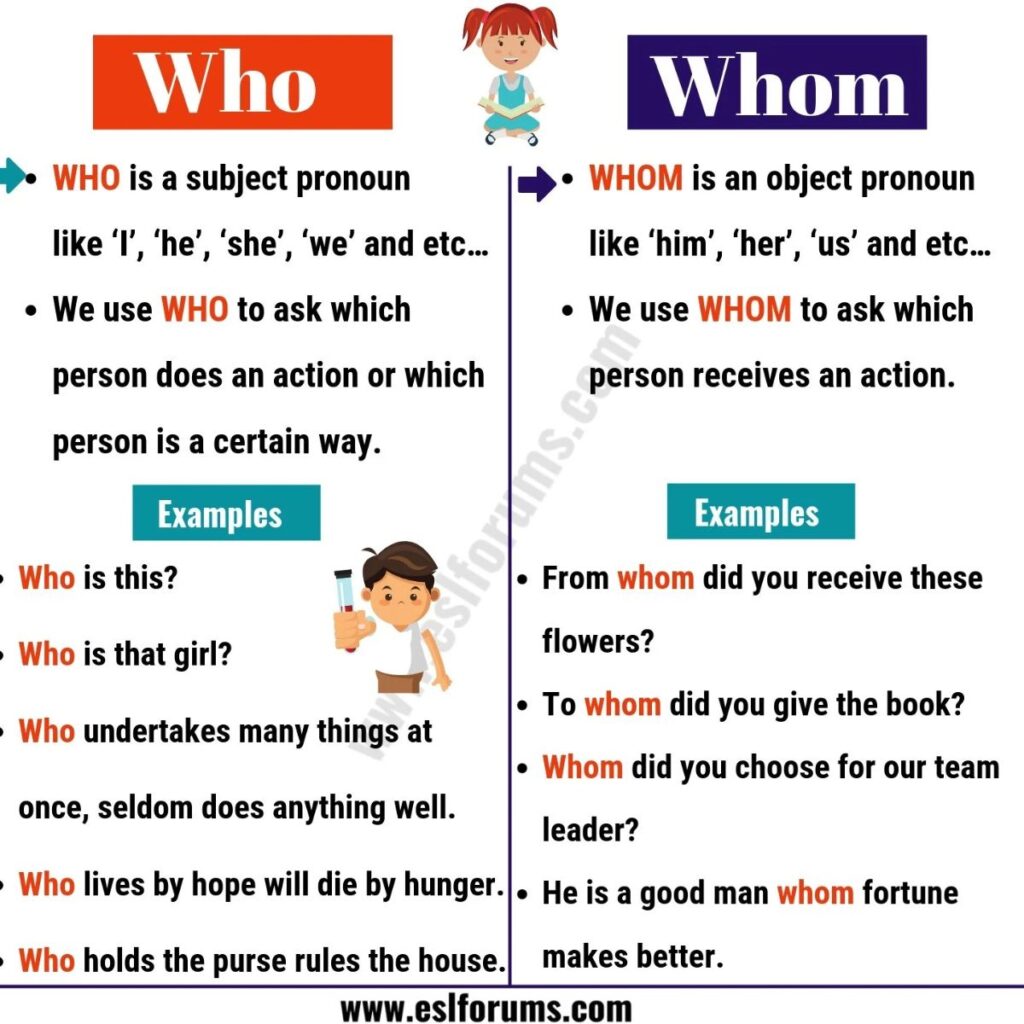
This confusion arises because “who” is used as a subject, while “whom” is used as an object. However, the line blurs in everyday conversation, making learners, professionals, and even native speakers second-guess themselves.
This article will clear up the difference, explain the history, show how British and American English handle it, and provide practical advice on when to use each. By the end, you’ll have the confidence to choose the right word every time without hesitation.
Who vs Whom Usage – Quick Answer
- Who = Subject (the doer of the action).
👉 Example: Who is calling? - Whom = Object (the receiver of the action).
👉 Example: To whom should I address the letter?
Quick Test: If you can replace it with he/she, use “who.” If you can replace it with him/her, use “whom.”
The Origin of Who vs Whom Usage
Both “who” and “whom” come from Old English.
- Who developed from the Old English “hwā,” used for subjects.
- Whom came from “hwām” or “hwom,” used for objects.
Historically, English had more cases (like Latin or German), which is why “whom” existed as the objective form. Over time, English simplified, and many people stopped using “whom” in casual speech, but it remains in formal grammar.
British English vs American English Spelling
In both British and American English, the spelling of “who” and “whom” is the same. The difference lies in usage frequency.
| Usage Context | British English | American English | Notes |
|---|---|---|---|
| Formal Writing | “Whom” used more often | “Whom” used less often | UK prefers traditional grammar rules. |
| Everyday Speech | “Who” even when “whom” is correct | Same as British | Informal speech avoids “whom.” |
| Business & Legal | “Whom” standard | “Whom” standard | Both keep it in contracts, academic, and legal writing. |
Which Spelling Should You Use?
- In the US: Use “who” in casual writing and “whom” in formal settings.
- In the UK: “Whom” appears slightly more, especially in professional documents.
- Globally: If writing for an international audience, “who” is safe unless formality is required.
👉 Rule of thumb: In emails, blogs, and conversations, stick to “who.” In academic, legal, or formal writing, use “whom.”
Common Mistakes with Who vs Whom Usage
- Using “who” when the object is required → Incorrect: Who should I invite? → Correct: Whom should I invite?
- Overusing “whom” to sound formal → Incorrect: Whom is at the door? → Correct: Who is at the door?
- Forgetting the substitution test (he/him) → Simple check avoids mistakes.
- Mixing spoken and written rules → Everyday talk allows “who,” but formal documents may not.
Who vs Whom in Everyday Examples

- Emails: To whom it may concern, is the classic formal opening.
- News: “The police did not say whom they arrested.”
- Social Media: People usually write, “Who did you meet?” instead of “Whom did you meet?”
- Formal Writing: “Whom the committee selects will receive the award.”
Who vs Whom – Google Trends & Usage Data
Google Trends shows:
- “Who” is far more common worldwide.
- “Whom” spikes in searches during exam season and grammar lessons.
- In the US and UK, people still ask the difference because usage feels tricky.
| Country | Preference | Notes |
|---|---|---|
| USA | Who | Whom only in formal settings |
| UK | Who (casual), Whom (formal) | Balanced mix |
| India | Who | Learners often search rules |
| Canada | Who | Similar to US |
| Australia | Who | Whom rare outside formal writing |
FAQs
1. Is “whom” outdated?
Not completely. It’s less common in speech but still correct in formal English.
2. Can I always use “who” instead of “whom”?
In casual contexts, yes. But in formal or academic writing, using “whom” is safer.
3. What’s the easiest way to decide?
Replace with he/she or him/her. If “him/her” fits, use “whom.”
4. Why does “whom” sound unnatural?
Because modern English has simplified, and most speakers drop older forms.
5. Do exams still test “whom”?
Yes, many English proficiency and school exams still ask the difference.
6. Is “To whom it may concern” correct?
Yes, it’s the standard formal greeting in letters and emails.
7. Can “whom” start a sentence?
Yes. Example: Whom did you see at the event?
Conclusion
The question of “Who vs Whom usage” comes up because English has shifted over time. “Who” works as the subject, while “whom” is the object. Though “whom” is fading in everyday talk, it still holds value in formal writing, academic papers, and business communication.
In American English, “who” dominates casual use, while “whom” survives in legal or academic writing. British English is slightly more traditional but follows the same trend.
The easiest trick is substitution: he/she = who, him/her = whom. With this simple rule, you can write confidently, avoid mistakes, and adjust your tone depending on your audience.
👉 Bottom line: Use “who” in casual writing, and save “whom” for when you need precision and professionalism.