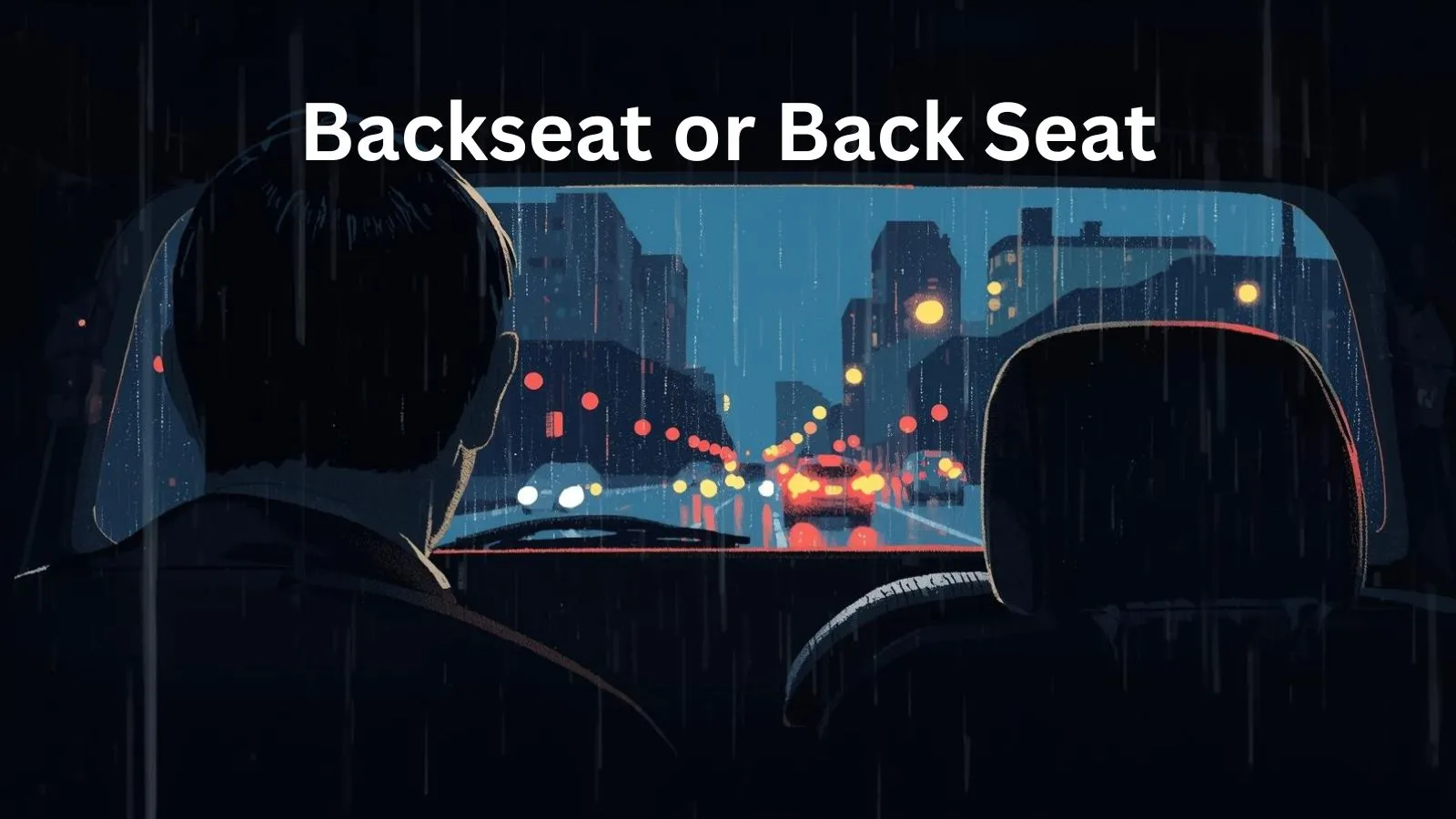
Have you ever typed “backseat” and then stopped to wonder if it should be “back seat” instead? If so, you are not alone. Many people search for “backseat or back seat” because both forms appear online, in books, and in everyday writing. However, they are not always interchangeable.
This confusion happens because English often joins words over time. As a result, some phrases become compound nouns, while others stay as two separate words. Therefore, writers feel unsure, especially in emails, blogs, or formal work. Moreover, spellcheck tools do not always explain why one form is better than the other.
In this article, you will get a quick answer first. Then, you will learn where these words came from, how British and American English use them, and which spelling you should choose for your audience. Finally, you will see real-life examples, common mistakes, and helpful usage tips. By the end, you will confidently know when to use backseat and when to use back seat.
Which Side of the Back Seat Is Safest?
Generally, the middle of the back seat is considered the safest place to sit in a car. This is because it is farthest from both side doors and absorbs less impact during a collision. Therefore, safety experts often recommend the center rear seat, especially for children.
However, not all vehicles have proper seat belts in the middle seat. In that case, the rear passenger-side seat (behind the front passenger) is the next safest option. This seat is farther from oncoming traffic and reduces injury risk in side-impact crashes.
On the other hand, the rear driver-side seat is slightly less safe compared to the passenger side because it is closer to traffic and more exposed during certain accidents. Still, it is safer than sitting in the front seat.
In summary:
- Safest: Middle back seat (with seat belt)
- Second safest: Rear passenger-side back seat
- Less safe (but still better than front): Rear driver-side back seat
Always wear a seat belt, because proper restraint greatly increases safety regardless of seating position.
Backseat or Back Seat – Quick Answer
- Back seat (two words) → Refers to the physical seat in the rear of a vehicle.
- Example: “She sat in the back seat of the car.”
- Backseat (one word) → Used mainly as an adjective or figurative noun.
- Example: “He took a backseat role in the project.”
So, back seat is usually literal. However, backseat is often figurative.
The Origin of Backseat or Back Seat
Originally, English used back seat as a simple noun phrase. It described the seat located at the back of a carriage or car. Over time, people began using the idea of the “back seat” to describe a passive role.
As language evolved, that figurative meaning became more compact. Therefore, backseat emerged as a single word, especially in American English. Meanwhile, the literal meaning stayed as two words. This is why spelling differences exist today.
British English vs American English Spelling
Both British and American English understand the two forms. However, usage patterns are slightly different.
| Usage Type | British English | American English | Example |
|---|---|---|---|
| Literal seat | Back seat | Back seat | “Children sat in the back seat.” |
| Figurative use | Back seat / backseat | Backseat | “He took a backseat in talks.” |
| Adjective form | Less common | Common | “Backseat driver” |
Therefore, American English prefers backseat more often in figurative use.
Which Spelling Should You Use?
- US audience: Use back seat for the physical seat. Use backseat for figurative or adjective use.
- UK/Commonwealth audience: Prefer back seat in most cases, especially formal writing.
- Global audience: When in doubt, use back seat because it is universally accepted.
Common Mistakes with Backseat or Back Seat
- Writing backseat when you mean the physical seat.
- ❌ “Sit in the backseat.” (literal)
- ✅ “Sit in the back seat.”
- Writing back seat in figurative phrases.
- ❌ “He took a back seat role.”
- ✅ “He took a backseat role.”
- Mixing both forms in the same document. Consistency matters.
Backseat or Back Seat in Everyday Examples
- Emails: “Please sit in the back seat during the trip.”
- News: “The minister decided to take a backseat in negotiations.”
- Social Media: “I’m sitting in the backseat today 🚗.”
- Formal Writing: “Management took a backseat approach to allow growth.”
Backseat or Back Seat – Google Trends & Usage Data
Google Trends shows that “back seat” is searched more for cars and travel topics. Meanwhile, “backseat” appears more in leadership, politics, and workplace content.
| Country | Popular Form | Context |
|---|---|---|
| USA | Backseat | Figurative, adjectives |
| UK | Back seat | Literal use |
| Canada | Both | Mixed usage |
| Australia | Back seat | Formal writing |
Comparison Table: Backseat vs Back Seat
| Form | Type | Meaning | Example |
|---|---|---|---|
| Back seat | Noun phrase | Physical seat | “Sit in the back seat.” |
| Backseat | Noun/Adjective | Passive role | “Take a backseat.” |
| Backseat driver | Compound noun | Meddling person | “Stop being a backseat driver.” |
FAQs
1. Is “backseat” one word or two?
Both are correct, but meaning decides usage.
2. Which is correct: backseat driver or back seat driver?
Backseat driver is correct.
3. Is “take a backseat” an idiom?
Yes, it means taking a less active role.
4. Can I use “backseat” in formal writing?
Yes, but mainly in figurative contexts.
5. Is “back seat” always two words?
Yes, when you mean the physical seat.
6. Which spelling is safer globally?
Back seat is safer for general use.
Conclusion
The confusion between backseat or back seat exists because English uses both forms for different meanings. Simply put, back seat refers to a real seat in a vehicle. On the other hand, backseat is used for figurative meanings or as an adjective.
Therefore, context is everything. If you are talking about cars, travel, or seating, choose back seat. However, if you are describing roles, control, or behavior, backseat is the better option. Moreover, knowing your audience helps. American readers accept backseat more freely, while British readers prefer back seat in formal writing.
In the end, when you understand the difference, writing becomes easier. As a result, your message stays clear and professional. When unsure, pause, check the meaning, and choose the form that fits your sentence best.