350+Affect vs Effect Difference–A Simple Guide You Need
If you’ve ever paused while writing an email, report, or essay and wondered whether to use “affect” or “effect,” you’re not alone. This is one of the most common word confusions in English. People search for the “affect vs effect difference” because both words look and sound similar, but their meanings and uses are very different.
The confusion often arises because “affect” is usually a verb while “effect” is usually a noun. However, there are exceptions where “affect” becomes a noun and “effect” acts as a verb. That’s what makes this topic tricky even for native speakers.
Understanding the difference helps you write clearly, sound professional, and avoid embarrassing grammar mistakes. In this guide, we’ll explore their meanings, origins, spelling differences, common mistakes, real-world examples, and usage trends. By the end, you’ll know exactly when to use “affect” and when to use “effect.”
Affect vs Effect Difference – Quick Answer
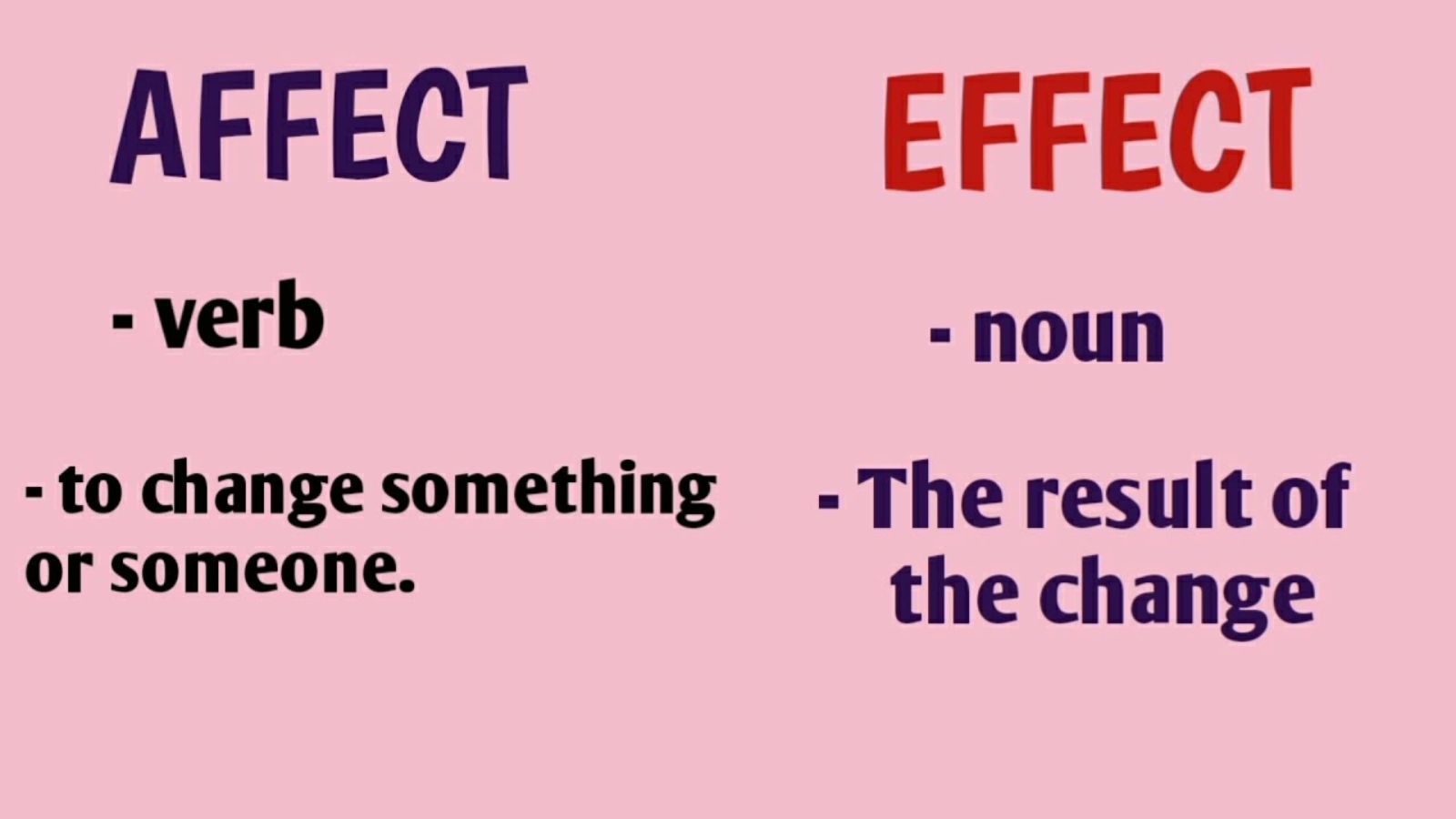
- Affect → Usually a verb meaning to influence or change something.
- Example: “The weather can affect your mood.”
- Effect → Usually a noun meaning the result or outcome of something.
- Example: “The new law had a positive effect on education.”
👉 Quick trick: If it’s an action, use affect. If it’s an end result, use effect.
The Origin of Affect vs Effect
Both words come from Latin roots.
- Affect comes from afficere, meaning to influence, act upon, or move emotionally.
- Effect comes from effectus, meaning a result, accomplishment, or outcome.
Over time, English kept both words, and their spellings stayed close, which explains the confusion. The difference in meaning (influence vs result) has been consistent for centuries, but their occasional role-switching (noun/verb) still puzzles learners.
British English vs American English Spelling
Luckily, there is no spelling difference between British and American English for “affect” and “effect.” The rules are the same. The only difference lies in how often people confuse them.
| Word | Part of Speech | US English Example | UK English Example | Notes |
|---|---|---|---|---|
| Affect | Verb | The medicine may affect sleep. | The weather can affect travel. | Same in US/UK |
| Effect | Noun | The new law had an effect. | The strike had an effect on schools. | Same in US/UK |
So, unlike colour vs color, this pair has no spelling changes between regions.
Which Spelling Should You Use?
Since the spelling is the same worldwide, the real choice is about knowing when to use each word correctly.
- Students/Professionals (US/UK/Global): Remember “Affect = Action, Effect = End result.”
- Academic Writing: Always double-check, because examiners often deduct marks for this mistake.
- Everyday Use: In casual writing, readers may still understand you, but in formal contexts the correct choice matters.
Common Mistakes with Affect vs Effect Difference
- Using “effect” as a verb in place of “affect.”
- Wrong: “The rain effected my mood.”
- Correct: “The rain affected my mood.”
- Using “affect” as a noun instead of “effect.”
- Wrong: “The new law had an affect.”
- Correct: “The new law had an effect.”
- Forgetting exceptions.
- “Effect” can be a verb meaning to bring about.
- Example: “The new manager will effect big changes.”
- “Affect” can be a noun in psychology, meaning emotional expression.
- Example: “The patient displayed a flat affect.”
- “Effect” can be a verb meaning to bring about.
Affect vs Effect in Everyday Examples

- Emails: “How will this decision affect our sales?”
- News: “The effect of climate change is clear in rising sea levels.”
- Social Media: “That movie really affected me!”
- Formal Reports: “The policy had a measurable effect on productivity.”
Affect vs Effect – Google Trends & Usage Data
Google Trends shows that searches for “effect” are much higher than for “affect.” This happens because many writers default to “effect” even when “affect” is correct.
| Country | Most Searched Term | Context |
|---|---|---|
| USA | Effect | Used in legal, business, and academic writing |
| UK | Effect | Common in media and news |
| Canada | Affect | Slightly higher interest in psychology term |
| Australia | Effect | Stronger focus in education and policy writing |
The data shows that confusion peaks during school exam seasons and essay-writing deadlines.
FAQs
1. How do you remember the difference between affect and effect?
Use this trick: Affect = Action (verb), Effect = End result (noun).
2. Can “effect” be a verb?
Yes. It means to bring about. Example: “The reforms will effect change.”
3. Can “affect” be a noun?
Yes, but mainly in psychology, meaning emotional expression. Example: “She had a happy affect.”
4. Which is correct: ‘take effect’ or ‘take affect’?
The correct phrase is “take effect.”
5. Do British and American English spell them differently?
No. Both use the same spellings.
6. Why is “effect” more common in writing?
Because it’s used in formal contexts like law, news, and academic writing.
7. Is it wrong if I mix them up?
Yes, in formal writing. In casual speech, people may still understand you, but it looks unprofessional in text.
Conclusion
The “affect vs effect difference” is one of the most common grammar challenges in English. The rule is simple: “Affect” is usually a verb (to influence), while “Effect” is usually a noun (a result). But knowing exceptions like “effect” as a verb and “affect” as a noun helps you master them completely.
Unlike other tricky English pairs, there’s no British vs American spelling issue here. The real problem is correct usage. Whether you’re a student writing essays, a professional drafting emails, or a content creator publishing blogs, getting this right makes your writing clear and credible.
So, next time you hesitate, remember the quick trick: Affect = Action, Effect = End result. With practice, you’ll never mix them up again.