Chose or Choose? Learn the Difference Easily
Have you ever written a sentence and wondered whether to say “chose” or “choose”? You’re not alone! This is one of the most common confusions in English grammar. People often search “chose or choose” because both words look similar but have different meanings and tenses. Using the wrong one can make a sentence sound awkward or grammatically incorrect.
This article explains the exact difference between chose and choose, their origins, and how to use them correctly. You’ll also see examples, common mistakes, and a simple comparison table. By the end, you’ll never mix them up again. Whether you’re writing an essay, an email, or a social media post, understanding this difference will instantly make your English more polished and professional.
Chose or Choose – Quick Answer
The difference is simple:
| Word | Part of Speech | Tense | Example |
|---|---|---|---|
| Choose | Verb | Present/Future | I choose to study English every day. |
| Chose | Verb | Past | I chose to study English yesterday. |
✅ In short:
- Use choose when talking about now or future.
- Use chose when talking about the past.
The Origin of “Chose” and “Choose”
Both words come from the Old English word “ceosan”, meaning to select or decide. Over time, English developed different verb forms for various tenses.
- Choose became the present tense form.
- Chose became the past tense form.
This pattern is similar to other irregular verbs, such as:
- Speak → Spoke
- Write → Wrote
- Choose → Chose
Therefore, the spelling difference exists because English evolved to show time (tense) changes through different verb forms.
British English vs American English Spelling
Interestingly, there is no spelling difference between British and American English for choose and chose. However, there might be slight differences in pronunciation and usage frequency.
| Aspect | British English | American English | Example |
|---|---|---|---|
| Spelling | Choose / Chose | Choose / Chose | No difference |
| Pronunciation | /tʃuːz/ and /tʃoʊz/ | /tʃuːz/ and /tʃoʊz/ | Almost identical |
| Usage | More common in formal writing | Common in daily speech | “He chose wisely.” |
👉 So, no matter where you live, the same spelling rules apply.
Which Spelling Should You Use?
- Use choose when you are talking about making a decision now or later.
- Example: I will choose my outfit tomorrow.
- Use chose when you are referring to a decision made in the past.
- Example: She chose to stay home yesterday.
If you’re unsure which one to pick, look for time clues in your sentence. Words like today, tomorrow, or always go with choose. Words like yesterday, last week, or ago go with chose.
👉 Tip: If the action already happened, use chose. If it hasn’t happened yet, use choose.
Common Mistakes with “Chose” vs “Choose”
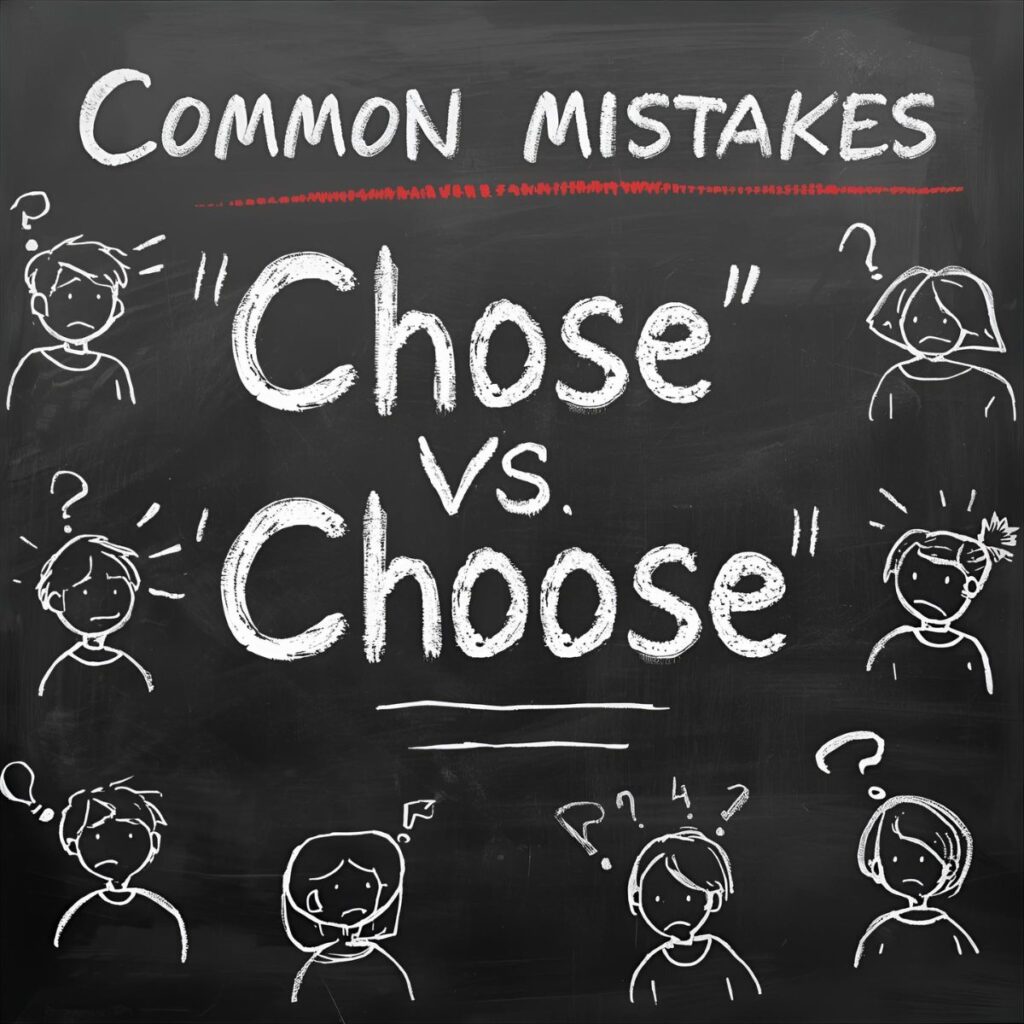
- ❌ I choose to study English yesterday. → ✅ I chose to study English yesterday.
- ❌ He chose to go tomorrow. → ✅ He will choose to go tomorrow.
- ❌ They have choose the best design. → ✅ They have chosen the best design.
💡 Remember: “chosen” is the past participle form used with have/has/had.
Example: I have chosen wisely.
“Chose” and “Choose” in Everyday Examples
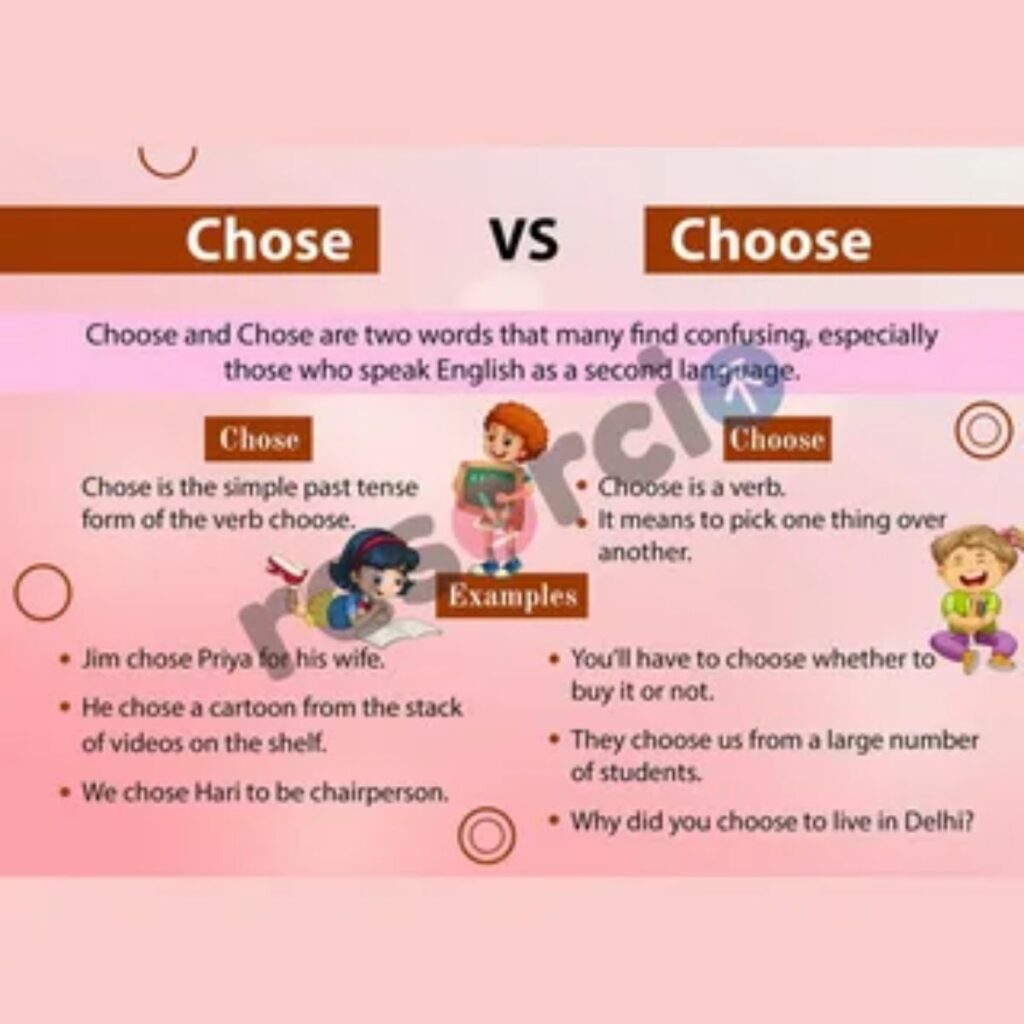
Let’s look at some real-life usage:
Emails:
- I will choose a meeting time and share the link soon.
- We chose your company for our next project.
News:
- The committee chose the winner after reviewing 500 entries.
Social Media:
- Choose kindness every day.
- I chose peace over drama.
Formal Writing:
- Citizens must choose their leaders carefully.
- The government chose to invest in education.
As you can see, both forms are common, but their timing changes the meaning.
“Chose” vs “Choose” – Google Trends & Usage Data
According to Google Trends, both words are highly searched globally, but “choose” appears more often since it’s used in daily decisions.
| Country | Most Searched Form | Usage Context |
|---|---|---|
| USA | Choose | Self-improvement, motivation quotes |
| UK | Choose | Education, life decisions |
| India | Chose | Grammar-related searches |
| Canada | Choose | Business writing |
| Australia | Choose | General communication |
The interest in this keyword spikes around exam seasons and grammar learning months, proving that many English learners look for clarity between the two.
FAQs
1. Is “chose” the past tense of “choose”?
Yes. “Choose” is present tense, and “chose” is its past tense form.
2. What is the past participle of “choose”?
The past participle is “chosen.” Example: I have chosen a new laptop.
3. Can I use “chose” in present tense?
No. “Chose” is only for actions that happened in the past.
4. Is there any difference in spelling between American and British English?
No. Both use the same spellings.
5. What are examples of irregular verbs like “choose”?
Examples: Speak–Spoke–Spoken, Write–Wrote–Written, Choose–Chose–Chosen.
6. Why do people confuse them?
Because they look similar and sound almost alike, but their tenses differ.
7. Which one is correct in “I have choose”?
The correct form is I have chosen.
Conclusion
The difference between “chose” and “choose” might seem small, but it changes the meaning completely. Choose is used for present and future actions, while chose is used for past actions.
To avoid mistakes, always look for time indicators in your sentence. If the action already happened, use chose. If it is happening now or later, use choose.
There’s no regional spelling difference, so this rule works for everyone — whether you’re in the US, UK, or anywhere else. By remembering this simple tip, you’ll never mix up chose and choose again.