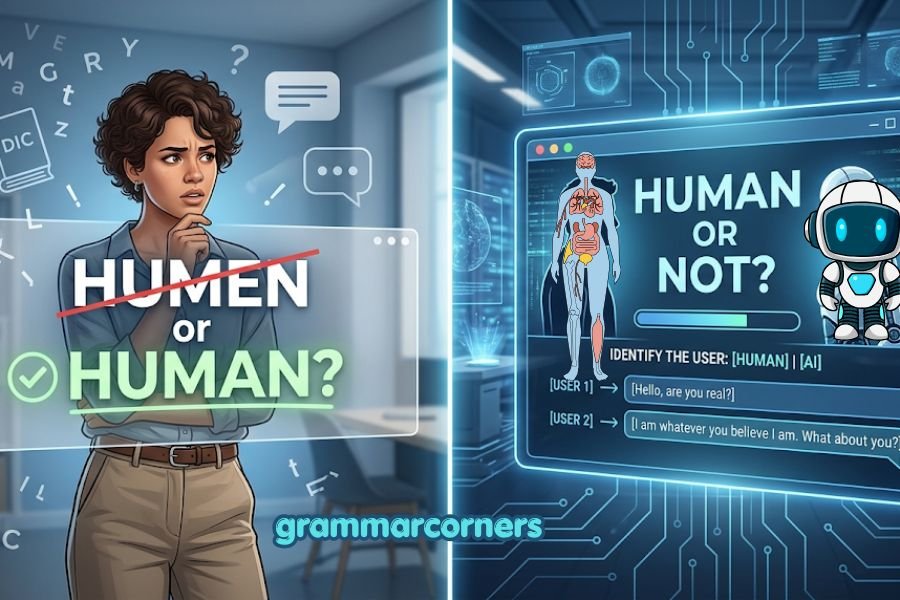
When people search “humens or not,” they may be asking about a spelling mistake, the plural of human, or the popular phrase “Human or Not,” which is associated with AI and online conversations. These are easy to mix up because human looks similar to man, while Human or Not has become a recognizable phrase in discussions about whether someone is a real person or an AI bot.
The most important point is simple: “humens” is not the standard plural of “human.” The correct plural is “humans.” If your intended phrase is “human or not,” then human is also spelled with a, not humens.
This guide explains the difference in simple English. It covers the origin of human, why humens is a common mistake, British and American usage, everyday examples, and the meaning of Human or Not in modern AI-related contexts.
Humens or Not – Quick Answer
“Humens” is generally incorrect in standard English.
If you mean one person or something related to people, use human.
If you mean more than one person, use humans.
| Incorrect/Common Mistake | Correct | Meaning |
|---|---|---|
| humen | human | One person or relating to people |
| humen | humans | More than one person |
| humen or not | human or not | Asking whether something is human |
| humen beings | human beings | People |
Examples
- Correct: Is this person human or not?
- Correct: Humans use language to communicate.
- Incorrect: Are they humens?
- Incorrect: Humen can make mistakes.
The reason for the confusion is easy to understand. English has the irregular plural man → men, so some people assume human should become humen. However, human follows a regular plural pattern: human → humans.
If you are referring to the online game Human or Not, the official phrase is Human or Not, not “Humen or Not.” The game asks players to determine whether they are chatting with a real person or an AI bot.
The Origin of Humen or Not
The word human has a different history from the word man, even though the two words are closely related in meaning.
Human entered English through French and ultimately comes from Latin humanus, meaning human or relating to people. It is connected with Latin homo, meaning a human being.
The word man, meanwhile, has Germanic roots. Because the two words come through different historical paths, they do not have to form their plurals in the same way.
This explains an important English rule:
man → men
human → humans
The spelling humen can therefore look logical at first glance, but it applies the plural pattern of man to a different word.
Some language references record humen as a humorous, rare, or nonstandard formation, but it is not the normal plural used in standard English.
Research into English-learning errors has also identified humen as an example of incorrectly applying the man → men pattern to human.
Why Does “Humen” Look Correct?
English contains many irregular plurals:
- man → men
- woman → women
- child → children
- tooth → teeth
- foot → feet
Because human contains the letters man, it is easy to assume the same spelling change should occur.
But human is not simply the word “man” with “hu” added to it. Its history is different.
The safest rule is:
One human, two or more humans.
British English vs American English Spelling
There is no British-American spelling difference between human and humans.
Both British English and American English use:
- human
- humans
The same spelling is used in Canadian, Australian, and other major varieties of English as well.
| Form | British English | American English | Correct? |
|---|---|---|---|
| human | human | human | ✅ |
| humans | humans | humans | ✅ |
| humen | humen | humen | ❌ Standard English |
| human being | human being | human being | ✅ |
| human beings | human beings | human beings | ✅ |
For example:
British English:
“Humans have changed the planet.”
American English:
“Humans have changed the planet.”
There is no need to change humans based on your audience.
This is different from words such as colour/color, centre/center, or organise/organize, where British and American spelling can differ.
Which Spelling Should You Use?
The professional recommendation is simple: use human or humans, not humen.
For American English
Use:
- human
- humans
- human being
- human behavior
For British English
Use:
- human
- humans
- human being
- human behaviour
Notice that human itself does not change. Other words around it may have British or American spelling differences.
For Global English
If you write for an international audience, human and humans are understood everywhere.
For websites, blogs, school assignments, business communication, and professional writing, avoid humen unless you are deliberately using it as a fictional, humorous, or brand-specific term.
Common Mistakes with Humen or Not
Here are some common errors and their corrections.
1. Humen instead of humans
❌ “Humen are social animals.”
✅ “Humans are social animals.”
2. Humen instead of human
❌ “Is he humen?”
✅ “Is he human?”
3. Confusing man and human
❌ “Human becomes humen because man becomes men.”
✅ “Human becomes humans, while man becomes men.”
4. Using “humen being”
❌ “Every humen being deserves respect.”
✅ “Every human being deserves respect.”
5. Using “humen” in formal writing
Avoid it in:
- school assignments
- university essays
- business emails
- reports
- websites
- news writing
- professional documents
Use human or humans instead.
Humen or Not in Everyday Examples
The phrase can appear in several different situations.
In Emails
Incorrect:
We should remember that all humen make mistakes.
Correct:
We should remember that all humans make mistakes.
In News Writing
Correct:
Scientists continue to study how humans interact with artificial intelligence.
In Social Media
Someone might write:
Are you sure this account is human or not?
Here, human or not asks whether the person behind an account is a real human or something automated.
In Formal Writing
Researchers are examining how humans respond to increasingly advanced artificial intelligence systems.
In Casual Conversation
Is that human or not?
This could mean, “Is that a real person, or is it a machine, bot, or artificial system?”
Humen or Not – Google Trends & Usage Data
Search interest around “humen or not” can be confusing because two different searches may be involved.
First, people search for humen because they want to know whether it is the correct plural of human. This is a spelling and grammar question. Search results consistently identify humans as the standard plural.
Second, people search for “Human or Not” because of the AI-related game and broader discussions about distinguishing humans from bots. The current Human or Not FAQ describes it as a social Turing test in which players chat for two minutes and try to determine whether they are talking with a person or an AI bot.
So the search intent can be divided into two groups:
| Search | Likely Intent | Correct/Meaning |
|---|---|---|
| humen | Spelling question | Use human |
| humen or humans | Grammar question | Humans is correct |
| human or humans | Singular/plural question | Both can be correct |
| human or not | Identity/AI question | Is something human? |
| Human or Not | Game/AI topic | A social Turing test game |
The important distinction is capitalization and context. “human or not” can simply be an English phrase, while “Human or Not” can refer specifically to the AI-focused game.
Humen vs Human vs Humans: Comparison Table
| Word/Phrase | Correct? | Use |
|---|---|---|
| human | ✅ | One person; also an adjective |
| humans | ✅ | More than one person |
| human being | ✅ | One person |
| human beings | ✅ | More than one person |
| humen | ❌ | Nonstandard/misspelled in normal English |
| human or not | ✅ | Question about whether something is human |
| Human or Not | ✅ | Name of an AI/social Turing test game |
FAQs About Humen or Not
Is “humen” a correct English word?
No. Humen is not the standard plural of human. The normal plural is humans. Some dictionaries or language resources may record humen as a rare humorous or nonstandard formation, but it should not be used as the normal plural in professional English.
What is the plural of human?
The plural of human is humans.
One human → two humans.
Why isn’t the plural of human “humen”?
Because human does not follow the irregular plural pattern of man → men. The two words also have different linguistic histories.
Is “human or not” correct?
Yes. Human or not is grammatically possible when asking whether someone or something is human.
For example:
“Can you tell if the account is human or not?”
What does “Human or Not” mean online?
It can refer to a social Turing test game where players try to identify whether they are chatting with a human or an AI.
Can I use “humen” in a joke?
You can use it intentionally as a humorous or fictional spelling. However, readers may assume it is a spelling mistake unless the context makes the joke clear.
Is “humans” used in both British and American English?
Yes. Humans is standard in both British and American English. There is no spelling difference between the two varieties.
Conclusion
The answer to “humen or not” depends slightly on what you mean, but the spelling rule is straightforward. If you are asking about the plural of human, the correct form is humans, not humen. If you are asking whether something is a person or an AI, the natural phrase is “human or not.”
The confusion often comes from the irregular plural man → men. Because human contains the letters man, it can seem logical to change it to humen. However, human has a different history and follows the regular plural rule: simply add -s.
For professional, academic, and everyday writing, use human for one person or as an adjective, and humans for multiple people. British and American English use the same spellings.
Finally, remember that Human or Not can also refer to an AI-focused social Turing test game. In that context, the phrase asks whether you are communicating with a real person or an artificial intelligence system.
Easy rule to remember: one human, many humans—not humen.