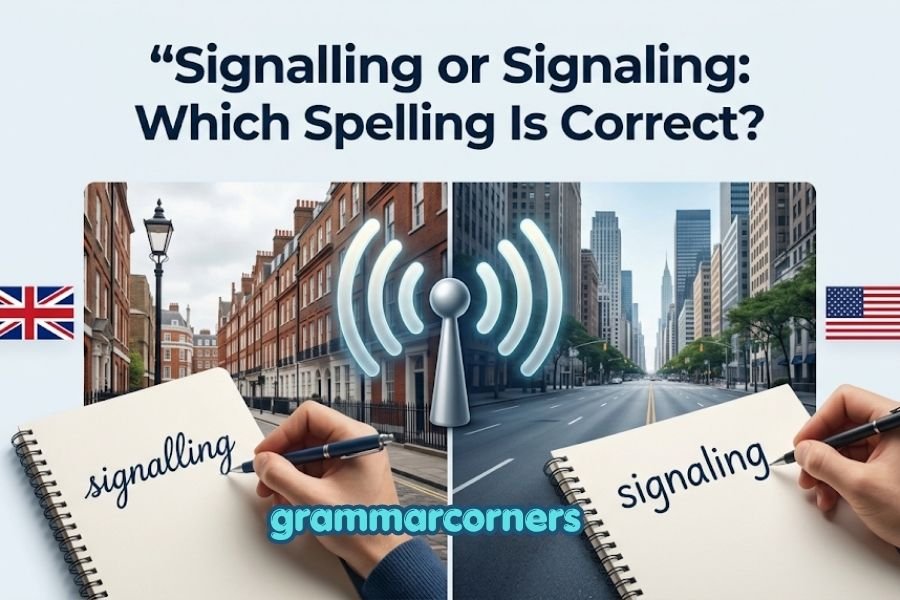
One extra l can make a big difference when you are writing for an international audience. If you have ever wondered whether “signalling” or “signaling” is correct, you are not alone. Both spellings are standard, but the correct choice depends mainly on which variety of English you are using.
The confusion usually appears because British and American English handle words ending in -l differently when adding certain suffixes. British English generally doubles the final l in words such as signal, giving us signalling. American English usually keeps one l, producing signaling.
This difference is similar to pairs such as travelling/traveling and cancelled/canceled. Neither spelling is inherently wrong. Instead, each follows the spelling conventions of a particular English variety.
Knowing the difference is useful for students, bloggers, businesses, editors, and anyone writing online. In this guide, we will explain signalling vs signaling, where the spellings come from, which version you should use, common mistakes, real-world examples, and how usage varies across countries.
Signalling or Signaling – Quick Answer
Both “signalling” and “signaling” are correct.
The difference is primarily British English vs American English:
- Signalling → British English
- Signaling → American English
Examples
British English:
The traffic lights are signalling that drivers should stop.
American English:
The traffic lights are signaling that drivers should stop.
The meaning is exactly the same.
| Spelling | English variety | Example |
|---|---|---|
| Signalling | British English | The device is signalling an error. |
| Signaling | American English | The device is signaling an error. |
The same pattern appears in related words:
- travelling / traveling
- cancelling / canceling
- modelling / modeling
- labelling / labeling
- signalling / signaling
The Origin of Signalling or Signaling
The word signal comes from Latin signum, meaning a mark, sign, or indication. It entered English through French and developed into the modern word signal, referring to something that communicates information.
The verb signal means to communicate or indicate something, often through a gesture, sound, light, or other recognizable sign.
When signal takes the -ing ending, English spelling conventions determine whether the final l is doubled.
This is where British and American English differ.
Why does British English use “signalling”?
Traditional British spelling conventions generally double the final l when adding a suffix beginning with a vowel, particularly in words such as:
- signal → signalling
- travel → travelling
- cancel → cancelling
- model → modelling
American English developed different preferences and generally does not double the final l in these cases:
- signal → signaling
- travel → traveling
- cancel → canceling
- model → modeling
Therefore, signalling and signaling developed as legitimate regional spelling forms.
British English vs American English Spelling
The main difference is simple:
British English
British English generally uses signalling with two l’s.
The warning system is signalling a problem.
American English
American English generally uses signaling with one l.
The warning system is signaling a problem.
The pronunciation and meaning remain the same.
Comparison table
| Feature | British English | American English |
|---|---|---|
| Correct spelling | Signalling | Signaling |
| Number of final Ls | Two | One |
| Base word | Signal | Signal |
| -ing form | Signalling | Signaling |
| Meaning | Same | Same |
| Pronunciation | Essentially the same | Essentially the same |
| Common usage | UK, Ireland, Australia, etc. | United States |
Other examples
| British English | American English |
|---|---|
| travelling | traveling |
| cancelling | canceling |
| modelling | modeling |
| labelling | labeling |
| signalling | signaling |
| fuelling | fueling |
There are exceptions and differences across individual style guides, so not every English-speaking country follows American or British conventions in exactly the same way.
Which Spelling Should You Use?
The best spelling depends on your audience.
For American English
Use:
signaling
Example:
The system is signaling a warning.
This is the standard form preferred in American English.
For British English
Use:
signalling
Example:
The system is signalling a warning.
This is the standard British spelling.
For UK and Commonwealth audiences
Signalling is generally the safer choice for audiences using British-style spelling.
This includes many contexts in:
- United Kingdom
- Ireland
- Australia
- New Zealand
- South Africa
However, individual countries and organizations may have their own style preferences.
For global websites
If your website serves readers worldwide, choose one spelling system and use it consistently.
For example, if your website mainly targets American readers, use:
signaling, traveling, canceled
If your website mainly targets British readers, use:
signalling, travelling, cancelled
Consistency is usually more important than choosing one variety over the other.
Common Mistakes with Signalling or Signaling
1. Mixing British and American spelling
A common mistake is using both versions in the same article.
❌ “The system is signalling a warning while the device is signaling an error.”
Unless you are intentionally discussing the spelling difference, choose one style.
✅ British style: “The system is signalling a warning while the device is signalling an error.”
✅ American style: “The system is signaling a warning while the device is signaling an error.”
2. Thinking “signaling” is always wrong
It is not wrong.
Signaling is the standard American English spelling.
3. Thinking “signalling” is a typo
It is not a typo.
Signalling is the standard British English spelling.
4. Adding an unnecessary extra letter
❌ signallling
✅ signalling
The correct British spelling contains two l’s, not three.
5. Confusing signal with sign
The base word is:
signal
Therefore:
- signal → signalling
- signal → signaling
The spelling does not change the meaning.
Signalling or Signaling in Everyday Examples
In an email
British English:
The monitoring system is signalling an issue that requires attention.
American English:
The monitoring system is signaling an issue that requires attention.
In business writing
British English:
The latest figures are signalling a change in customer behavior.
American English:
The latest figures are signaling a change in customer behavior.
In news writing
Analysts said the latest economic data was signaling a possible change in market conditions.
A British publication might write:
Analysts said the latest economic data was signalling a possible change in market conditions.
On social media
The warning signs are signalling that something needs to change.
Or in American English:
The warning signs are signaling that something needs to change.
In formal writing
The results are signalling a significant shift in consumer preferences.
American style:
The results are signaling a significant shift in consumer preferences.
Signalling or Signaling – Google Trends & Usage Data
Search interest for “signalling” and “signaling” varies significantly by country because each spelling is associated with different English-language conventions.
Readers in the United States are more likely to search for and use signaling, while readers in the United Kingdom and other regions that follow British spelling are more likely to use signalling.
Google Trends measures relative search interest, rather than providing an exact number of searches. Search interest can also change depending on the selected country, time period, and search category.
For SEO, this means both spellings can be valuable keywords.
If your website targets American readers, prioritize:
signaling
If your website targets British readers, prioritize:
signalling
For international SEO, you can naturally mention both:
“Signalling or signaling: both spellings are correct, but British English uses signalling while American English uses signaling.”
This directly matches the searcher’s intent while explaining the regional difference.
Signalling vs Signaling: Comparison Table
| Word | British English | American English |
|---|---|---|
| Signal + ing | signalling | signaling |
| Travel + ing | travelling | traveling |
| Cancel + ing | cancelling | canceling |
| Model + ing | modelling | modeling |
| Label + ing | labelling | labeling |
| Fuel + ing | fuelling | fueling |
The important pattern is that British English generally retains the doubled l, while American English often uses a single l in these forms.
Is Signalling or Signaling More Correct?
Neither is universally “more correct.”
The correct choice depends on the English variety.
If you are writing in British English, use signalling.
If you are writing in American English, use signaling.
Think of it like:
British: signalling
American: signaling
The difference is spelling, not meaning.
FAQs About Signalling or Signaling
1. Is signalling or signaling correct?
Both are correct. Signalling is generally British English, while signaling is generally American English.
2. Is signalling British or American?
Signalling is the British English spelling.
3. Is signaling British or American?
Signaling is the American English spelling.
4. Why does British English have two Ls?
British English generally doubles the final l in words such as signal when adding -ing, producing signalling.
5. Does signalling mean something different from signaling?
No. Both words have the same meaning and pronunciation. The difference is regional spelling.
6. Should I use signalling or signaling for SEO?
Use the spelling that matches your target audience. Use signaling for primarily American audiences and signalling for primarily British audiences.
7. Can I use both spellings in the same article?
Yes, especially when your article is specifically about the spelling difference. Otherwise, choose one English style and use it consistently.
Conclusion
The choice between signalling or signaling is straightforward once you know the difference between British and American English. Signalling is the standard British spelling, while signaling is the standard American spelling. Both forms have the same meaning, pronunciation, and grammatical function.
The difference comes from regional spelling conventions surrounding words ending in -l. British English generally doubles the final l in forms such as signalling, travelling, and modelling. American English generally uses one l, giving us signaling, traveling, and modeling.
For writers, the most important rule is consistency. If you are writing for American readers, choose signaling. If your audience uses British English, choose signalling. For international content, you can mention both forms while selecting one as your primary spelling.
So, if you are wondering which one is correct, the answer is simple: both are correct; your audience determines which spelling you should use.