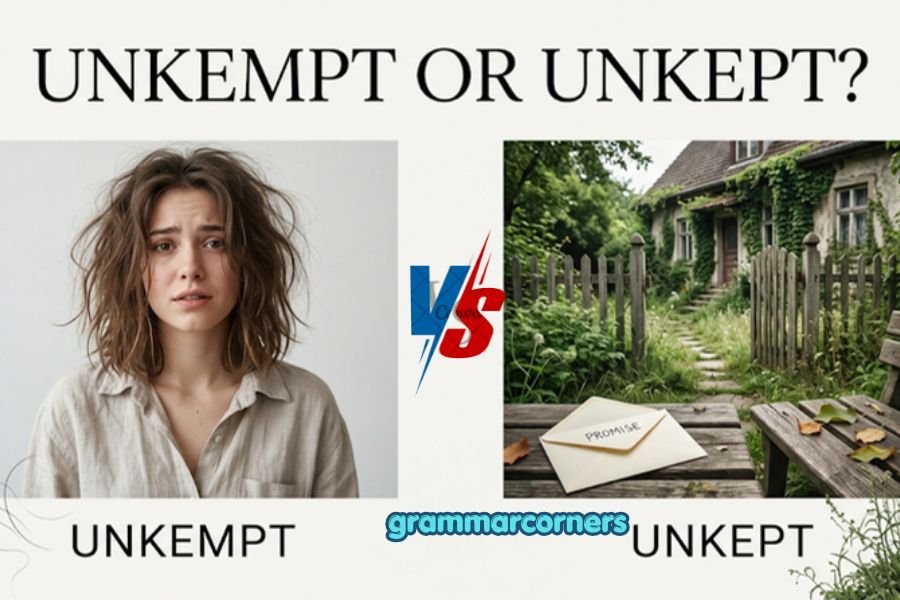
Have you ever written “unkept” when you meant “unkempt”? You are not alone. These two words look almost identical, sound similar, and can both relate to something that has not been properly cared for. That makes unkempt or unkept a common English word-choice question.
The good news is that both words can be legitimate, but they do not have the same meaning. Unkempt usually describes something messy, untidy, or poorly groomed, especially hair, clothing, a person’s appearance, or a garden. Unkept means something has not been kept, maintained, observed, or fulfilled, such as an unkept promise or an unkept garden. Cambridge and Dictionary.com both recognize these distinct uses.
Understanding the difference helps you choose the right word in emails, essays, professional writing, and everyday conversation. This guide explains unkempt vs. unkept, their origins, spelling, British and American usage, common mistakes, examples, and search-interest patterns.
Unkempt or Unkept – Quick Answer
Both “unkempt” and “unkept” are real words, but they have different meanings.
- Unkempt = messy, untidy, or poorly groomed.
- Unkept = not kept, maintained, observed, or fulfilled.
Quick examples
Unkempt:
His hair looked unkempt after the long trip.
Unkept:
The company was criticized for its unkept promise.
Another example:
The garden looked unkempt.
This emphasizes its messy appearance.
The garden was unkept.
This emphasizes that it had not been maintained.
Oxford defines unkempt as not well cared for, neat, or tidy, especially when describing hair or appearance. Cambridge defines unkept as something not cared for properly, including promises that have not been fulfilled.
The easiest way to remember
Unkempt = untidy.
Unkept = not kept.
| Word | Main meaning | Example |
|---|---|---|
| Unkempt | Messy or poorly groomed | His hair was unkempt. |
| Unkept | Not maintained or fulfilled | She was upset about his unkept promise. |
The Origin of Unkempt or Unkept
The two words have different histories, even though they look closely related.
Origin of “Unkempt”
Unkempt comes from un- + kempt.
The word kempt is an old word meaning neat, tidy, or combed. Oxford traces unkempt to Middle English and explains that kempt comes from an older form related to comb.
Dictionary.com dates unkempt to around 1590–1600 and identifies it as a variant of an older form meaning “not combed.”
Today, kempt is uncommon, but unkempt remains widely used.
For example:
- unkempt hair
- unkempt beard
- unkempt appearance
- unkempt lawn
- unkempt garden
Origin of “Unkept”
Unkept is much more straightforward.
It is formed from:
un- + kept
The word kept is the past participle of keep. Therefore, unkept can mean something that has not been kept, maintained, honored, or fulfilled.
For example:
- an unkept promise
- an unkept commitment
- an unkept agreement
- an unkept garden
Dictionary.com defines unkept as something not taken care of or maintained, and also something not observed or obeyed, such as a promise or agreement.
This history explains why the two words can sometimes overlap when talking about neglected places or objects.
British English vs American English Spelling
There is no major British-versus-American spelling difference between unkempt and unkept.
Both British and American English normally spell them exactly the same way:
- unkempt
- unkept
Cambridge gives the same pronunciation and spelling for both UK and US English.
The main difference is meaning and context, not national spelling.
Comparison table
| Feature | British English | American English |
|---|---|---|
| Messy appearance | unkempt | unkempt |
| Not maintained | unkept | unkept |
| Unfulfilled promise | unkept promise | unkept promise |
| Messy hair | unkempt hair | unkempt hair |
| Spelling difference | None | None |
| Main issue | Choosing the right meaning | Choosing the right meaning |
For example:
UK:
He arrived with unkempt hair.
US:
He arrived with unkempt hair.
The spelling remains unchanged.
One related difference you may notice is dishevelled in British English versus disheveled in American English. But that difference does not apply to unkempt.
Which Spelling Should You Use?
The best word depends on what you are trying to say, not whether your audience is American or British.
Use “unkempt” for appearance
Choose unkempt when something looks messy, untidy, or poorly groomed.
Examples:
- unkempt hair
- unkempt beard
- unkempt clothing
- unkempt appearance
- unkempt lawn
- unkempt garden
The man looked tired and unkempt.
Use “unkept” for something not maintained or fulfilled
Choose unkept when something has not been kept, maintained, or fulfilled.
Examples:
- an unkept promise
- an unkept commitment
- an unkept agreement
- an unkept garden
- an unkept property
The politician faced criticism over several unkept promises.
For global English
If you write for an international audience, the safest rule is simple:
Use “unkempt” for messiness and appearance. Use “unkept” when you specifically mean “not kept.”
That distinction works well in American, British, and other varieties of standard English.
Common Mistakes with Unkempt or Unkept
Mistake 1: Writing “unkept hair”
If you mean messy or poorly groomed hair, unkempt hair is the standard choice.
❌ He had unkept hair.
✅ He had unkempt hair.
Mistake 2: Writing “unkempt promise”
A promise that has not been fulfilled is normally an unkept promise.
❌ She broke an unkempt promise.
✅ She broke an unkept promise.
Mistake 3: Assuming “unkept” is always wrong
This is also incorrect.
Unkept is a legitimate word with established meanings. Cambridge specifically gives examples involving unkept promises, gardens, and buildings.
Mistake 4: Treating “unkempt” as a spelling of “unkept”
They are not simply two spellings of the same word.
Their meanings developed differently.
Mistake 5: Using “unkempt” for every neglected thing
Sometimes unkept is more precise.
Compare:
The garden was unkempt.
This focuses on its messy appearance.
The garden was unkept.
This focuses on the fact that nobody maintained it.
Both can work in certain contexts, but the emphasis is different.
Unkempt or Unkept in Everyday Examples
Understanding the words becomes easier when you see them in realistic situations.
In emails
Unkempt:
The property currently has an unkempt appearance and requires landscaping.
Unkept:
The client raised concerns about several unkept commitments.
In news writing
Unkempt:
Residents complained about the area’s unkempt streets and overgrown vegetation.
Unkept:
The organization faced criticism over unkept promises made during the campaign.
In social media
My hair is completely unkempt today!
Or:
Another unkept promise from the company.
In formal writing
The building’s unkempt exterior created a poor impression on visitors.
Or:
The committee expressed concern about the contractor’s unkept obligations.
In everyday conversation
Your hair looks a little unkempt.
He made an unkept promise.
The yard has become unkempt.
The property has been unkept for years.
These examples show the basic distinction clearly: unkempt often describes appearance, while unkept emphasizes failure to keep or maintain something.
Unkempt or Unkept – Google Trends & Usage Data
Google Trends measures search interest, rather than proving that one word is grammatically correct. Google describes Trends as a tool for exploring what people search for and analyzing search interest over time and across locations.
For this keyword, searches are likely to be driven by people trying to understand whether “unkept” is a spelling mistake for “unkempt” and by writers checking the difference between the two words.
The important usage pattern is much clearer in dictionary and language-reference sources: unkempt is the established everyday choice for messy or poorly groomed appearance, while unkept has its own meaning connected to something not being kept, maintained, or fulfilled.
What searchers usually want to know
People searching “unkempt or unkept” commonly want answers to questions such as:
- Is unkept a word?
- Is unkempt the correct spelling?
- Should I say unkempt hair?
- Is it an unkept or unkempt promise?
- What is the difference between unkept and unkempt?
Google Trends can help compare interest by country and time period, but it should not be treated as a dictionary or grammar authority.
Usage comparison
| Search/usage concern | Best word |
|---|---|
| Messy hair | Unkempt |
| Messy beard | Unkempt |
| Poor appearance | Unkempt |
| Untidy garden | Unkempt |
| Promise not fulfilled | Unkept |
| Commitment not fulfilled | Unkept |
| Agreement not honored | Unkept |
| Property not maintained | Unkept or unkempt, depending on emphasis |
Unkempt vs Unkept: Side-by-Side Comparison
| Word | Correct? | Meaning | Common examples |
|---|---|---|---|
| Unkempt | Yes | Untidy, messy, poorly groomed | unkempt hair, unkempt appearance |
| Unkept | Yes | Not kept, maintained, or fulfilled | unkept promise, unkept garden |
| Kempt | Yes, uncommon | Neat or well-groomed | a kempt appearance |
| Kept | Yes | Maintained, retained, or fulfilled | kept promise, well-kept garden |
Simple rule
Unkempt = messy.
Unkept = not kept.
This one rule will solve most usage questions.
FAQs About Unkempt or Unkept
1. Is “unkempt” the correct spelling?
Yes. Unkempt is the standard word when you mean messy, untidy, or poorly groomed. Oxford and Cambridge both recognize it with these meanings.
2. Is “unkept” a real word?
Yes. Unkept is a legitimate word. It can mean not maintained or not fulfilled, especially when referring to promises, commitments, or agreements.
3. Should I say “unkempt hair” or “unkept hair”?
Use unkempt hair when you mean messy, untidy, or poorly groomed hair.
His hair looked unkempt.
4. Is it “unkempt promise” or “unkept promise”?
Use unkept promise.
He apologized for his unkept promise.
A promise can be kept or unkept.
5. Is “unkept” a misspelling of “unkempt”?
Not always. Unkept has its own established meaning. However, using unkept when you mean messy or poorly groomed can be a word-choice error.
6. Does British English use “unkempt”?
Yes. British English uses unkempt, just like American English. There is no UK/US spelling difference for this word.
7. How can I remember the difference?
Remember:
Unkempt = untidy.
Unkept = not kept.
If you are talking about hair or appearance, unkempt is usually the word you need.
Conclusion: Unkempt or Unkept?
The difference between unkempt and unkept is small in spelling but important in meaning. Unkempt is the best choice when you describe something messy, untidy, disheveled, or poorly groomed. It is especially common with words such as hair, beard, appearance, clothing, lawn, and garden. Oxford and Cambridge both support this meaning.
Unkept, meanwhile, means something has not been kept, maintained, observed, or fulfilled. It works naturally with expressions such as unkept promise, unkept commitment, and unkept agreement. It can also describe a neglected garden or property when the emphasis is on a lack of maintenance.
So, if you are describing messiness, choose unkempt. If you mean something was not kept or fulfilled, choose unkept.
The easiest memory trick is: “Unkempt means untidy; unkept means not kept.” This rule works in both British and American English.