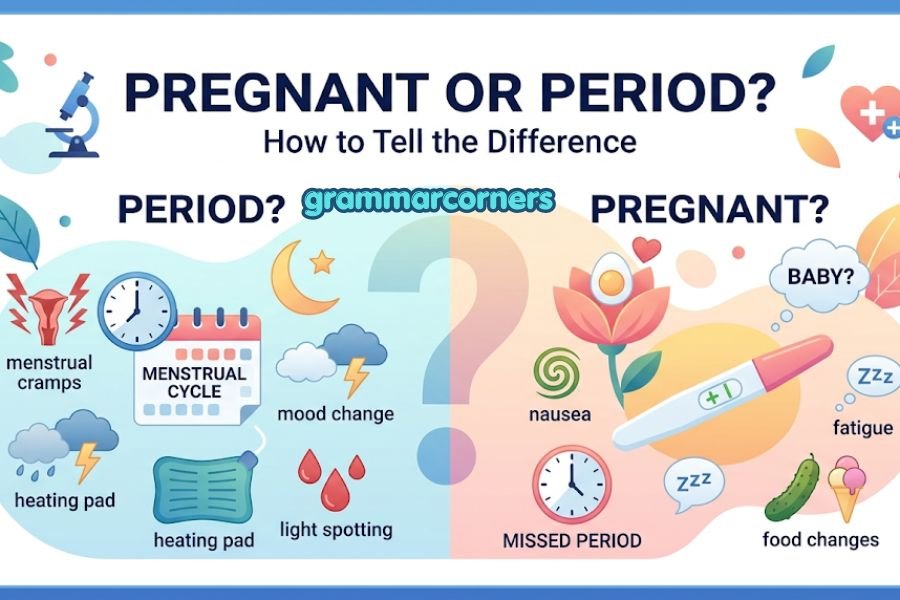
Are you feeling tired, bloated, crampy, or unusually emotional and wondering, “Am I pregnant or is my period coming?” You are not alone. Early pregnancy and premenstrual syndrome (PMS) can feel surprisingly similar, which makes it difficult to know what your body is telling you.
Both can cause sore breasts, fatigue, mood changes, bloating, mild cramps, and food cravings. A missed period can make the question even more confusing because pregnancy is one possible reason for a late period, but it is not the only one. Stress, changes in weight, exercise, hormonal contraception, and other factors can also affect menstrual cycles.
This guide explains the differences between pregnant or period symptoms, what spotting may mean, when to take a pregnancy test, and when you should seek medical care. Most importantly, remember that symptoms alone cannot reliably confirm pregnancy. A pregnancy test is the best way to check.
Pregnant or Period – Quick Answer
If you are asking “pregnant or period?”, the short answer is: symptoms alone usually cannot tell you for certain.
Early pregnancy and PMS can share many symptoms:
- Sore or tender breasts
- Tiredness
- Bloating
- Mood changes
- Mild abdominal cramps
- Food cravings
- Headaches
- Changes in appetite
Early pregnancy may also cause nausea, increased urination, constipation, increased vaginal discharge, sensitivity to smells, and a missed period.
A period usually follows your normal menstrual pattern. If pregnancy has occurred, your expected period may not arrive.
Quick comparison
| Symptom | More common before a period | Can happen in early pregnancy |
|---|---|---|
| Cramps | Yes | Yes |
| Bloating | Yes | Yes |
| Sore breasts | Yes | Yes |
| Mood changes | Yes | Yes |
| Fatigue | Yes | Yes |
| Food cravings | Yes | Yes |
| Nausea | Less typical | Common in some pregnancies |
| Frequent urination | Less typical | Can occur |
| Missed period | No | Common early sign |
| Light spotting | Sometimes | Can occur |
These are general patterns, not a diagnosis. Some people have few or no early pregnancy symptoms.
The Origin of “Pregnant or Period”
The phrase “pregnant or period” is not a traditional medical term. It is a simple search phrase people use when they are trying to compare early pregnancy symptoms with symptoms that happen before menstruation.
What does “pregnant” mean?
Pregnant describes the state of carrying a developing embryo or fetus after conception. Pregnancy begins after fertilization and implantation, followed by hormonal and physical changes in the body.
What does “period” mean?
A period, also called menstruation, is the shedding of the uterine lining when pregnancy has not occurred during that menstrual cycle. The menstrual cycle is counted from the first day of one period to the first day of the next.
Because both pregnancy and the menstrual cycle involve major hormonal changes, their symptoms can overlap.
British English vs American English Spelling
Unlike many common English spelling questions, pregnant and period do not have major British-versus-American spelling differences.
The same spellings are normally used in both varieties of English.
| Meaning | American English | British English |
|---|---|---|
| Carrying a developing baby | pregnant | pregnant |
| Monthly menstrual bleeding | period | period |
| Menstruation | menstruation | menstruation |
| Symptoms before a period | PMS | PMS |
| Pregnancy test | pregnancy test | pregnancy test |
There are some vocabulary differences around menstruation. For example, period, menstruation, and monthly cycle may be used differently depending on the speaker and context. However, pregnant is spelled the same in American and British English.
Which Spelling Should You Use?
If you are writing about this topic, use pregnant and period regardless of whether your audience is American, British, Canadian, Australian, or international.
For a general audience:
- Use pregnant or period for a simple, conversational phrase.
- Use early pregnancy symptoms in medical or educational writing.
- Use PMS symptoms when specifically discussing premenstrual syndrome.
- Use menstrual period when you need to be medically precise.
For SEO content, phrases such as “pregnant or period symptoms,” “pregnancy symptoms vs period symptoms,” and “how to tell if you are pregnant or getting your period” closely match common search intent.
Common Mistakes with “Pregnant or Period”
People often make several mistakes when trying to identify pregnancy based only on symptoms.
Mistake 1: Assuming cramps mean a period is coming
Cramps can happen before a period, but mild cramping can also occur during early pregnancy.
Better approach: Consider the timing, your usual cycle, and whether pregnancy is possible.
Mistake 2: Assuming sore breasts prove pregnancy
Breast tenderness can occur with both PMS and early pregnancy.
Better approach: Do not use breast tenderness alone as evidence of pregnancy.
Mistake 3: Assuming every late period means pregnancy
Pregnancy is an important cause of a missed period, but it is not the only cause. Stress, weight changes, excessive exercise, hormonal contraception, breastfeeding, and other conditions can affect periods.
Mistake 4: Relying on symptoms instead of testing
Symptoms can suggest pregnancy, but they cannot confirm it.
Better approach: Take a pregnancy test when appropriate.
Mistake 5: Thinking bleeding always means you are not pregnant
Light spotting can occur in early pregnancy. However, bleeding during pregnancy can have many causes and should not automatically be assumed to be a normal period.
Pregnant or Period in Everyday Examples
The phrase pregnant or period is usually used in informal questions, online searches, and health discussions.
In a text message
“I have cramps and sore breasts. I can’t tell if it’s my period or if I could be pregnant.”
On social media
“Can anyone explain the difference between early pregnancy symptoms and PMS?”
In an email
“I am experiencing unusual symptoms and a late period. I would like to know whether I should take a pregnancy test.”
In formal health writing
Instead of writing:
“How do you know if you’re pregnant or period?”
A clearer version is:
“How can you distinguish early pregnancy symptoms from premenstrual symptoms?”
In an online search
People may search:
- “Pregnant or period?”
- “Pregnant or period cramps?”
- “Pregnant or period symptoms?”
- “Pregnant or period bloating?”
- “Pregnant or period spotting?”
- “Pregnant or period breast pain?”
These searches usually reflect uncertainty about overlapping symptoms rather than a confirmed diagnosis.
Pregnant or Period – Google Trends & Usage Data
Search interest around pregnancy symptoms and menstrual symptoms can change depending on season, location, and current health discussions. Exact Google Trends numbers also change over time, so it is better not to treat a single trend score as a permanent measure of popularity.
The phrase “pregnant or period” has strong search intent because it directly describes a common uncertainty: whether physical symptoms are related to pregnancy or an upcoming period.
Related searches often include:
- pregnant or period symptoms
- pregnancy symptoms vs period symptoms
- period symptoms but could I be pregnant
- early pregnancy symptoms
- PMS vs pregnancy
- pregnancy test after missed period
For SEO, content that answers the question immediately and then explains the differences is likely to serve readers better than content that simply lists symptoms.
Pregnant or Period: Key Differences
Here is a simple side-by-side comparison.
| Feature | Period/PMS | Early Pregnancy |
|---|---|---|
| Expected bleeding | Usually arrives around the expected time | Period may be missed |
| Cramps | Common | Can occur |
| Breast tenderness | Common | Common |
| Fatigue | Common | Common |
| Mood changes | Common | Possible |
| Bloating | Common | Possible |
| Nausea | Less typical | Can occur |
| Frequent urination | Not a classic PMS symptom | Can occur |
| Food or smell changes | Possible | Can occur |
| Light spotting | Can occur for various reasons | Can occur |
| Best way to know | Track your cycle | Pregnancy test |
The overlap is important: there is no symptom checklist that can reliably diagnose pregnancy.
When Should You Take a Pregnancy Test?
If you have missed your period and pregnancy is possible, a home pregnancy test can help.
Most pregnancy tests are most reliable from the first day of a missed period. If you do not know when your period is due, the NHS advises testing at least 21 days after the last time you had unprotected sex.
If the result is negative but your period still does not arrive and you continue to think you may be pregnant, consider repeating the test after a few days. Testing too early can produce a less reliable negative result.
A positive home pregnancy test is generally highly reliable when used correctly.
Can You Have a Period While Pregnant?
A true menstrual period does not occur during pregnancy. However, vaginal bleeding or spotting can happen during pregnancy, especially early in pregnancy.
Because bleeding during pregnancy can have several causes, it should not automatically be treated as a normal period.
If you think you might be pregnant and experience bleeding, contact a healthcare professional for advice, particularly if the bleeding is heavy or accompanied by pain.
When to Seek Medical Help
Seek urgent medical attention if you may be pregnant and have symptoms such as significant abdominal or pelvic pain, dizziness or fainting, or unusual vaginal bleeding.
An ectopic pregnancy can cause bleeding and pain and requires prompt medical assessment. Symptoms can develop during the early weeks of pregnancy.
If you have a missed period but pregnancy tests remain negative, other causes may need to be considered. Persistent or repeated missed periods should be discussed with a healthcare professional.
FAQs About Pregnant or Period
1. How can I tell if I am pregnant or getting my period?
You usually cannot tell from symptoms alone. PMS and early pregnancy can cause similar symptoms, so a pregnancy test is the most useful way to check.
2. Are pregnancy cramps different from period cramps?
They can feel similar. Mild cramping may occur in early pregnancy, so cramps alone cannot tell you whether your period is coming or whether you are pregnant.
3. Can sore breasts mean my period is coming?
Yes. Breast tenderness is a common PMS symptom, but it can also occur in early pregnancy.
4. Can you be pregnant and have spotting?
Yes. Light spotting can occur during early pregnancy. However, bleeding during pregnancy has several possible causes, so unusual bleeding should be discussed with a healthcare professional.
5. Is a missed period always a sign of pregnancy?
No. Pregnancy is one cause of a missed period, but stress, weight changes, exercise, hormonal contraception, breastfeeding, and other health factors can also affect menstrual cycles.
6. When is the best time to take a pregnancy test?
Most pregnancy tests can be used from the first day of a missed period. If you do not know when your period is due, testing at least 21 days after the last unprotected sex can be useful.
7. Can I be pregnant without having pregnancy symptoms?
Yes. Every pregnancy is different, and some people have few or no noticeable early symptoms.
Conclusion
The question “pregnant or period?” is common because early pregnancy and PMS can produce many of the same symptoms. Cramps, breast tenderness, fatigue, bloating, mood changes, and food cravings can happen before a period and during early pregnancy. That means symptoms alone are not a reliable way to know what is happening.
A missed period can be an early sign of pregnancy, but it can also happen for other reasons. If pregnancy is possible, a home pregnancy test is a much better way to find out. Most tests are reliable from the first day of a missed period, while testing too early can lead to a false-negative result.
If you experience unusual bleeding, severe pain, fainting, or other concerning symptoms while pregnancy is possible, seek medical advice promptly.
In short: symptoms may give you clues, but a pregnancy test gives you a much clearer answer.