Writing about money can be stressful enough without wondering whether you should write cheque or check. If you have ever filled out a payment form, written a business email, or prepared content for an international audience, you may have noticed that both spellings are common. So, which one is correct?
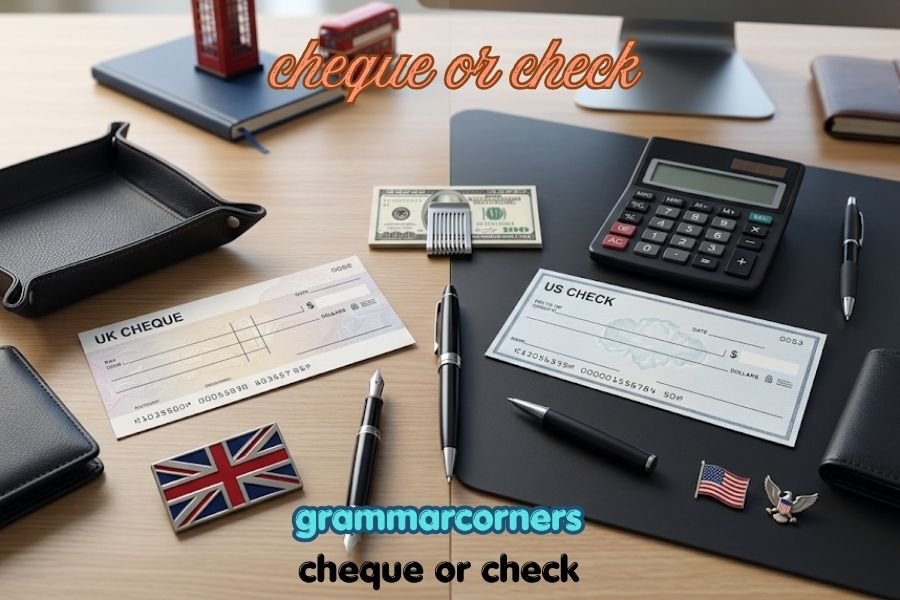
The answer is simple: both “cheque” and “check” are correct, but they are used in different varieties of English. Cheque is the standard spelling in British English and is also widely used in countries such as Canada, Australia, and New Zealand when referring to a written bank payment. Check is the standard American English spelling for the same financial document.
The confusion happens because check has several meanings in English. It can mean to examine something, stop something, or verify information. In American English, it also means a written payment from a bank account.
Understanding cheque or check is useful for students, professionals, writers, businesses, and anyone communicating across countries. This guide explains the difference, history, spelling rules, common mistakes, and which form you should use.
Cheque or Check – Quick Answer
Cheque and check mean the same thing when referring to a written bank payment.
- Cheque = British English
- Check = American English
Examples
British English:
“I paid the bill by cheque.”
American English:
“I paid the bill by check.”
The pronunciation is essentially the same, but the spelling changes depending on the English variety.
| Meaning | British English | American English |
|---|---|---|
| Written bank payment | Cheque | Check |
| Examine something | Check | Check |
| Verify information | Check | Check |
| Stop or restrain | Check | Check |
| Confirm something | Check | Check |
The important point is that only the financial meaning normally changes spelling.
The Origin of Cheque or Check
The words cheque and check have a shared history.
The English word check has roots in Old French and ultimately comes from terminology associated with the game of chess. The idea developed from stopping or controlling something.
The financial sense developed later. A written payment order became associated with the idea of checking or controlling money held by a bank.
The spelling cheque developed under French influence and became established in British English for the financial instrument.
Meanwhile, check remained the preferred spelling in American English.
This is why modern English has two standard forms:
British English → cheque
American English → check
The difference is therefore not a mistake. It is a standard example of regional spelling variation.
British English vs American English Spelling
The clearest difference is:
British English: cheque
American English: check
When check has a non-financial meaning, however, British English also uses check.
For example:
- “Please check your email.”
- “The doctor will check your temperature.”
- “Check the information carefully.”
But when referring specifically to a bank payment, British English generally uses cheque.
Comparison Table
| Context | British English | American English |
|---|---|---|
| Bank payment | Cheque | Check |
| Check your email | Check | Check |
| Check the answer | Check | Check |
| Check the equipment | Check | Check |
| Pay by bank document | Cheque | Check |
| Chequebook/checkbook | Chequebook | Checkbook |
| Cheque account/checking account | Current account | Checking account |
Examples
British English:
“She wrote a cheque for £500.”
American English:
“She wrote a check for $500.”
Both sentences are correct within their respective varieties of English.
Which Spelling Should You Use?
Your choice should depend on your audience.
For American English
Use check when referring to a bank payment.
“I mailed the check yesterday.”
American English also uses check for other meanings.
“Please check the document.”
For British English
Use cheque when referring to a bank payment.
“I sent the cheque yesterday.”
Continue to use check for the other meanings.
“Please check the document.”
For Commonwealth English
Cheque is commonly used in several Commonwealth varieties of English, including British, Australian, and New Zealand English.
Canadian English also commonly uses cheque for the financial meaning.
For international writing
If your audience includes both American and British readers, you can write:
“Payment can be made by cheque (UK) or check (US).”
For a website targeting one country, follow that country’s standard spelling consistently.
Common Mistakes with Cheque or Check
1. Thinking “cheque” is misspelled
❌ “Cheque is an incorrect spelling of check.”
✅ “Cheque is the standard British spelling for a bank payment.”
2. Using “cheque” for every meaning of check
❌ “Please cheque your email.”
✅ “Please check your email.”
Cheque is normally used specifically for the financial meaning.
3. Mixing American and British spelling
❌ “I mailed the cheque to my American bank.”
This may be understandable, but check would normally be expected in American English.
4. Writing “checkbook” in British English
For British English, the traditional spelling is:
✅ chequebook
American English uses:
✅ checkbook
5. Confusing “check” with “cheque” in international business
If your document is intended for a specific country, use the spelling expected by that audience.
6. Assuming pronunciation changes
The two words are generally pronounced the same when referring to the financial instrument.
The difference is primarily spelling and regional usage.
Cheque or Check in Everyday Examples
In an email
British English:
“Please confirm when you receive the cheque.”
American English:
“Please confirm when you receive the check.”
In business writing
British English:
“The company issued a cheque to the supplier.”
American English:
“The company issued a check to the supplier.”
In news writing
“The customer received a cheque from the company.”
A British publication might use cheque, while an American publication would normally use check.
On social media
“I finally received my cheque!”
An American user would typically write:
“I finally received my check!”
In formal writing
British English:
“Payment may be made by cheque.”
American English:
“Payment may be made by check.”
In everyday conversation
“Did you send the check?”
or
“Did you send the cheque?”
Both are correct. The appropriate choice depends on the variety of English being used.
Cheque or Check – Google Trends & Usage Data
Search interest for “cheque” and “check” varies significantly by country.
This happens because check has many meanings beyond banking. Someone searching for “check” could be looking for information about verifying something, checking a status, or completing a task. Therefore, raw Google search interest for check does not directly measure interest in financial checks.
By contrast, cheque is much more strongly associated with the financial meaning.
Google Trends measures relative search interest rather than providing an exact count of searches. Search patterns can also change depending on country, time period, language, and current events. Google Trends
General usage pattern
- United States: “check” is standard.
- United Kingdom: “cheque” is standard for bank payments.
- Australia: “cheque” is commonly used.
- New Zealand: “cheque” is commonly used.
- Canada: “cheque” is widely used.
- International business: Either may appear depending on the organization’s preferred English style.
For SEO, using both terms can be useful when the search intent is specifically about the spelling difference.
Cheque vs Check: Comparison Table
| Feature | Cheque | Check |
|---|---|---|
| Financial payment | Yes | Yes |
| British English | Standard | Not normally used for financial payment |
| American English | Not standard | Standard |
| Canadian English | Common | Sometimes encountered |
| Australian English | Standard/common | Less common |
| New Zealand English | Standard/common | Less common |
| Non-financial meaning | No | Yes |
| Pronunciation | Same | Same |
| Main difference | Regional spelling | Regional spelling |
Is Cheque or Check More Correct?
Neither is universally “more correct.”
The correct choice depends on the English variety you are using.
If you are writing for readers in the United States, use check.
If you are writing for readers in the United Kingdom, use cheque.
The most important rule is consistency. Do not randomly switch between cheque and check in the same document when referring to bank payments.
Is a Cheque the Same as a Check?
Yes.
A cheque and a check are the same type of financial instrument. The difference is primarily the spelling used in different varieties of English.
For example:
British: “The bank received the cheque.”
American: “The bank received the check.”
The financial meaning is the same.
FAQs About Cheque or Check
1. Is cheque or check correct?
Both are correct. Cheque is the standard British spelling for a bank payment, while check is the standard American spelling.
2. Is cheque British or American?
Cheque is primarily British English. It is also used in several other varieties of English, including Canadian, Australian, and New Zealand English.
3. Is check American English?
Yes, check is the standard American English spelling for the financial document.
4. Can I use “check” in British English?
Yes, but normally not for the financial meaning. British English uses check for meanings such as “examine” or “verify.”
For a bank payment, British English normally uses cheque.
5. Why do Americans spell cheque as check?
American English developed its own spelling conventions, and check became the standard American form for the financial meaning.
6. Is “chequebook” British or American?
Chequebook is the traditional British spelling.
American English uses checkbook.
7. Which spelling should I use in an international article?
If your article discusses the difference, use both terms and explain the regional distinction. If you are targeting a specific country, use that country’s preferred spelling.
Conclusion
The choice between cheque or check is straightforward once you know the regional difference. Both words refer to the same financial payment instrument, but cheque is the standard spelling in British English, while check is the standard American English form.
The distinction is not simply a matter of right versus wrong. It is an example of how English spelling changes across regions. British English uses cheque for the financial meaning but still uses check for meanings such as examining, verifying, or stopping something. American English uses check for both the financial and non-financial meanings.
For readers in the United States, choose check. For British and many Commonwealth audiences, choose cheque. If you are creating international content, you can mention both forms to prevent confusion.
The most important rule is consistency. Once you choose the spelling appropriate for your audience, use it throughout your article, email, business document, or website. Cheque and check are both correct—the right choice depends on where and for whom you are writing.